
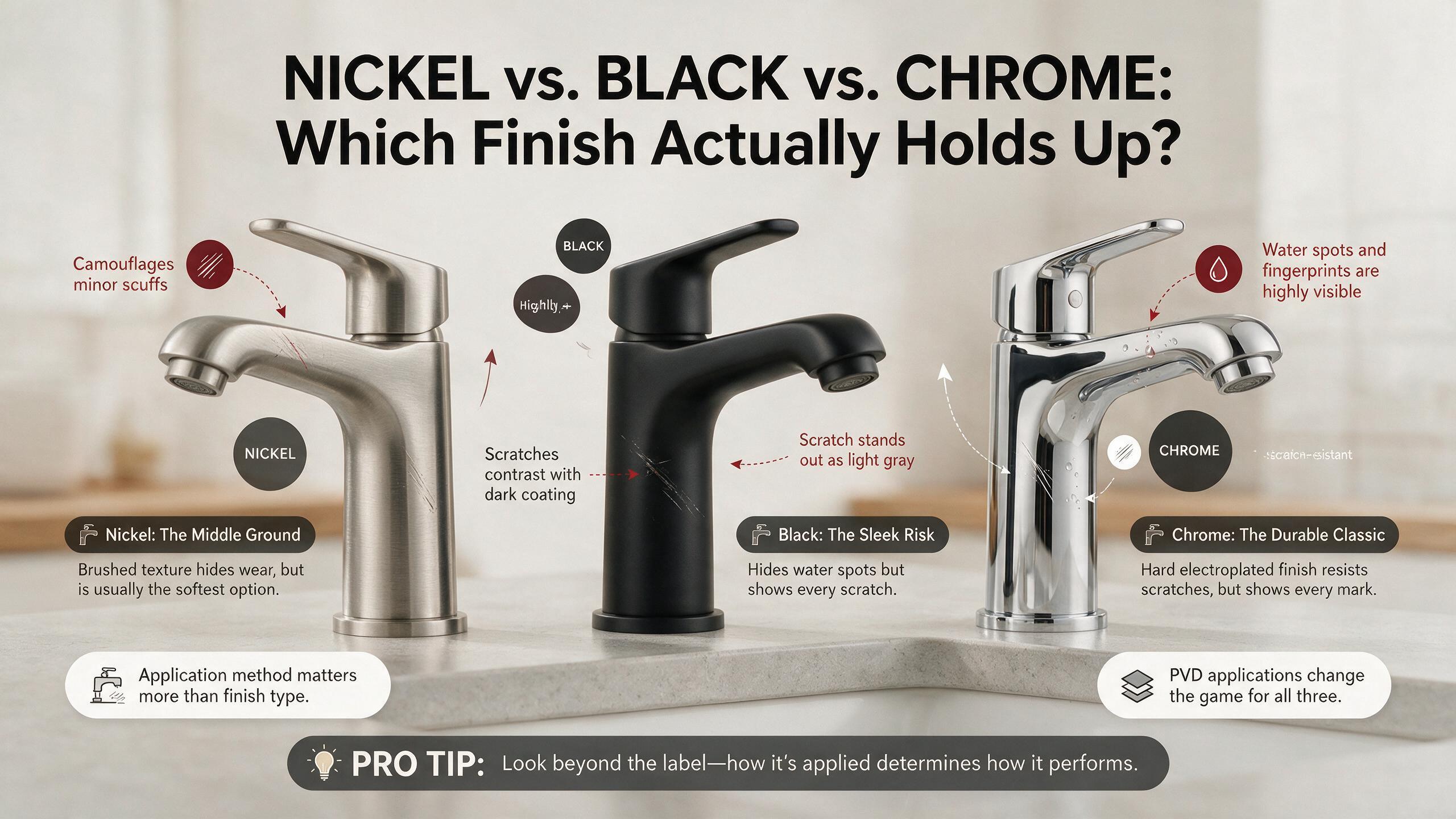
Chrome scratches the least because electroplated chrome is harder than nickel or the base metal under a black PVD coat, but it shows every water spot and fingerprint in direct light. Matte black hides spotting almost completely but reveals scratches as light gray marks because the color is a coating, not the base metal. Brushed nickel splits the difference: the textured finish masks minor wear and spotting, but it’s usually the softest of the three unless it’s applied by PVD. The finish matters less than how it was applied, and that’s where most buyers stop reading a spec sheet too early.
How Each Finish Is Actually Applied
Two processes account for almost every fixture on the market: electroplating and PVD (physical vapor deposition). Electroplating uses an electrical current to bond a thin metal layer, usually nickel or chrome, onto the base fixture in a liquid bath. It’s the older, cheaper process and it’s why standard chrome and standard brushed nickel are usually the least expensive finish options on a given model line.
PVD is a vacuum process that vaporizes metal (titanium nitride, zirconium, or similar) and bonds it to the surface at a molecular level. The result is a harder, denser finish that resists scratching and won’t tarnish the way electroplated nickel can over years of exposure to moisture and cleaning chemicals. Matte black is almost always PVD, because black electroplating isn’t a stable, durable process the way chrome and nickel plating are. Some brushed nickel and all “brushed gold” or bronze finishes are now PVD as well, but you have to check the spec sheet or ask, because manufacturers don’t always advertise which process they used for a given finish tier.
The practical takeaway: two faucets can carry the same finish name and have very different wear characteristics depending on whether the finish is plated or vapor-deposited. Don’t assume “brushed nickel” means the same coating across price tiers.
Cartridge Quality Behind the Finish
The finish is cosmetic. The cartridge is what determines whether the faucet still operates correctly in five years, and it’s usually specified separately from the finish, though the two tend to travel together on a given price tier. Ceramic disc cartridges are the standard for anything above entry-level today, and cycle-life ratings of 500,000+ cycles are common on mid-range and higher fixtures. A cycle is one on-off movement of the handle, so 500,000 cycles translates to decades of normal household use.
Budget fixtures, regardless of finish, sometimes still use rubber-seal or lower-grade ceramic cartridges with shorter rated cycle life. This is a bigger long-term reliability factor than the finish choice. A PVD matte black faucet with a cheap cartridge will still need cartridge replacement or start dripping years before a chrome faucet with a quality ceramic disc cartridge shows any performance issue.
Check the cartridge cycle rating on the spec sheet, not just the finish name, before comparing price between two units. If the manufacturer doesn’t publish a cycle rating, treat that as an information gap, not a non-issue.
Scratch and Wear Resistance Compared
| Finish | Typical Process | Relative Hardness | Scratch Visibility |
|---|---|---|---|
| Chrome | Electroplating | High | Scratches show as bright metal, visible but rare |
| Brushed Nickel (electroplated) | Electroplating | Medium | Textured surface masks light scratches |
| Brushed Nickel (PVD) | PVD | High | Same masking benefit, better resistance to deep scratches |
| Matte Black (PVD) | PVD | High | Scratches expose lighter base metal underneath, high contrast |
ASME A112.18.1 covers material and performance requirements for plumbing fixture fittings in the US, including finish adhesion and corrosion resistance testing. IAPMO also lists finish durability criteria under its certification listings for faucets and fittings. Neither standard guarantees a finish is scratch-proof, but a fixture that’s certified to A112.18.1 has been through standardized corrosion and finish adhesion testing that an uncertified import has not. Ask for the certification listing, not just a claim of “commercial grade” on the packaging.
Hard Water Spotting by Finish
Chrome and polished finishes show hard water spots the most because the reflective surface highlights every mineral deposit under bathroom lighting. This isn’t a flaw in the finish; it’s physics. A shiny surface makes any residue visible, and daily use with hard water will produce visible spotting within days if the fixture isn’t wiped down.
Matte black shows almost no water spotting because the surface doesn’t reflect light the same way. This is likely the single biggest real-world durability advantage matte black has over chrome, more so than scratch resistance, and it’s rarely mentioned in comparisons focused on looks.
Brushed nickel falls in between. The brushed texture diffuses reflection enough that minor spotting is less noticeable than on chrome, but it’s not invisible the way it is on matte black.
None of this is affected by whether the finish is PVD or electroplated. Spotting visibility is a function of surface reflectivity and texture, not the application process.
Which Finish Hides Fingerprints Best
- Matte black: Hides fingerprints and smudges better than any other common finish, largely because it lacks a reflective surface to show oil residue.
- Brushed nickel: Textured surface diffuses fingerprint marks reasonably well, second-best of the three.
- Chrome: Shows fingerprints and smudges immediately under any direct lighting. This is the most common complaint in real households with multiple daily users.
If the fixture will see heavy daily contact (kitchen faucet, shared bathroom faucet, shower valve trim), fingerprint visibility is a legitimate daily-maintenance factor, not a cosmetic afterthought.
Verdict for High-Use Bathrooms
For a high-traffic bathroom where minimal wiping down is realistic, PVD matte black hides both water spots and fingerprints best and holds up to scratching as well as PVD nickel, provided the cartridge underneath is rated for high cycle life. For a bathroom where scratch resistance matters most and someone is willing to wipe the fixture regularly, chrome with a quality ceramic disc cartridge remains the most durable base material and the easiest and cheapest to source replacement parts for. Brushed nickel, especially PVD brushed nickel, is the reasonable middle choice when you want moderate spot-hiding and moderate fingerprint-hiding without committing to the higher-contrast wear pattern that scratches produce on matte black.
Regardless of finish, confirm the fixture uses a 1/2-inch NPT or IPS supply connection matching your existing rough-in, since finish and connection type are independent specs and mismatches are a common installation-day surprise.
Before You Buy
- Confirm whether the finish is PVD or electroplated. Ask the manufacturer directly if the spec sheet doesn’t say.
- Check the cartridge cycle-life rating (500,000+ cycles is a reasonable minimum for daily household use).
- Look for ASME A112.18.1 compliance or IAPMO listing on the product documentation.
- Verify the supply connection is standard 1/2-inch NPT or IPS to match your existing rough-in plumbing.
- If you’re comparing two fixtures at a similar price point but different finish claims, ask the retailer or manufacturer which finish process was used. A “lifetime finish warranty” claim is only as good as the process behind it.
If the spec sheet is missing cartridge cycle ratings or certification listings entirely, treat that as a red flag worth a phone call to the manufacturer before purchase, not just a paperwork gap.
Browse a wide range of faucets in different finishes and style at Junoshowers.com